




Macular Degeneration Treatment & Management

Your eyesight helps you stay independent and live the life you want. Many older adults lose vision due to age-related macular degeneration (AMD), which can cause central vision loss. AMD affects the part of the eye that gives you sharp, central vision. Understanding the risk factors for AMD is important, as they can significantly impact your eye health. At Reedsburg Area Medical Center (RAMC), we work with patients to find and treat AMD early. We want to help you keep your central vision and your quality of life for as long as possible.
Dr. Douglas Bull is our eye specialist. He provides expert eye care and uses the most modern diagnostic tools. Dr. Bull can diagnose and monitor the progression of macular degeneration in his patients, helping them to maintain their vision. He provides care tailored to your needs. If you live in Reedsburg, Sauk County, or nearby, you can get specialized eye care close to home.


Understanding Age-Related Macular Degeneration (AMD)
Macular Degeneration is a condition that can affect the macula, the portion of your retina responsible for seeing most things clearly. With age, macular degeneration can progress, leading to difficulty reading, driving, or recognizing faces.
There are two main types of AMD:
Dry Macular Degeneration
Dry AMD is the most common form. This problem happens slowly as the macula gets thinner over time, particularly in individuals with high blood pressure. Small clumps of protein called drusen appear under the retina. This can slowly change how you see things.
Wet Macular Degeneration
Wet AMD is less common than other types, but it is also more serious. In wet AMD, abnormal blood vessels grow, leaking blood or other fluid beneath the retina. This can cause rapid vision loss, and treatment options, including laser surgery, may be considered.
Both types can significantly affect central vision. With early detection and monitoring, potential damage can be decreased and progression slowed.
Signs and Symptoms of Macular Degeneration
Macular degeneration can start slowly, so it’s important to have regular eye exams. If you have AMD, you might notice these signs:
- Your central vision might look blurry or bent.
- It can be hard to read or know faces.
- Straight lines may look wavy or not right.
- You may need brighter light when doing things up close.
- There could be a dark or blank spot in the middle of your sight.
How We Diagnose Macular Degeneration at RAMC
At RAMC, we use the latest imaging tools. With these, we detect and monitor macular degeneration at each step. Some tests you may have are:
Optical Coherence Tomography (OCT): This test produces clear images of the retina. Optical coherence tomography helps detect thinning, swelling, or excess fluid in the eye.
Visual Acuity and Amsler Grid Testing: These tests check how clear your central vision is. It helps you see if there are any changes or distortions in what you look at with the Amsler grid.

Treatment Options for Macular Degeneration
There is no cure for AMD right now, but there are ways to slow it down and help reduce your risk of AMD while preserving your vision. At RAMC, Dr. Bull offers treatment options tailored to your needs.
For Wet Macular Degeneration
Anti-VEGF Injections: These medications help prevent the growth of abnormal blood vessels beneath the retina and reduce fluid leakage that can cause rapid vision loss. While Dr. Bull does not perform injection treatments at Reedsburg Area Medical Center, he works closely with trusted retinal specialists who provide this care. After treatment, Dr. Bull continues to monitor your eye health and coordinates your follow-up care locally at RAMC.
Laser Therapy: In select cases, laser photocoagulation may be recommended to seal leaking blood vessels and prevent further retinal damage. This procedure is performed by a retinal specialist, and Dr. Bull ensures seamless coordination between your specialist and ongoing care at RAMC to help preserve your vision and overall eye health.
For Dry Macular Degeneration
Nutritional and Lifestyle Management: A diet rich in antioxidants, zinc, and vitamins C and E, like in the AREDS2 formula, along with certain lifestyle changes, may help slow progression.
Monitoring and Regular Eye Exams: Regular eye exams help detect any changes in your eyes. This way, you and your doctor can see whether dry AMD progresses to wet AMD as early as possible.
Healthy Habits: If you stop smoking, eat a lot of leafy greens, and wear sunglasses that block UV light, you help keep your eyes healthy for a long time.
Why Choose Our Practice
If you believe you may have the signs of macular degeneration, you’ll want an evaluation from an Ophthalmologist that you can trust. Dr. Douglas Bull and the team at Reedsburg Area Medical Center will provide exceptional care that is close to home.
- Dr. Bull is a board-certified ophthalmologist with extensive experience in diagnosing and treating AMD
- The clinic uses the latest retinal imaging and tests to find problems early.
- The office is in Reedsburg and it serves Sauk County and local residents.
- Patients get care focused on them, with learning and long-term help.
Frequently Asked Questions (FAQs)
At what age should I start getting screened for macular degeneration?
Macular degeneration becomes more common after age 50. It’s recommended to have annual comprehensive eye exams starting in your 50s, or sooner if you have a family history of AMD, high blood pressure, or other risk factors.
Can macular degeneration affect both eyes?
Yes. While AMD may begin in one eye, it often develops in the other eye over time. Regular monitoring allows Dr. Bull to detect early changes in both eyes and adjust your care plan to help preserve as much vision as possible.
How quickly does macular degeneration progress?
The rate of progression varies from person to person. Dry AMD tends to advance slowly over several years, while wet AMD can cause rapid changes in vision. Early diagnosis and consistent follow-up care are key to preventing severe vision loss.
Are there any new treatments or research advances for AMD?
Yes. Ongoing research continues to improve AMD management, particularly for wet macular degeneration. Newer anti-VEGF medications and combination therapies are helping patients maintain vision longer. Dr. Bull stays current with the latest advancements to ensure his patients receive the best available care in Reedsburg.
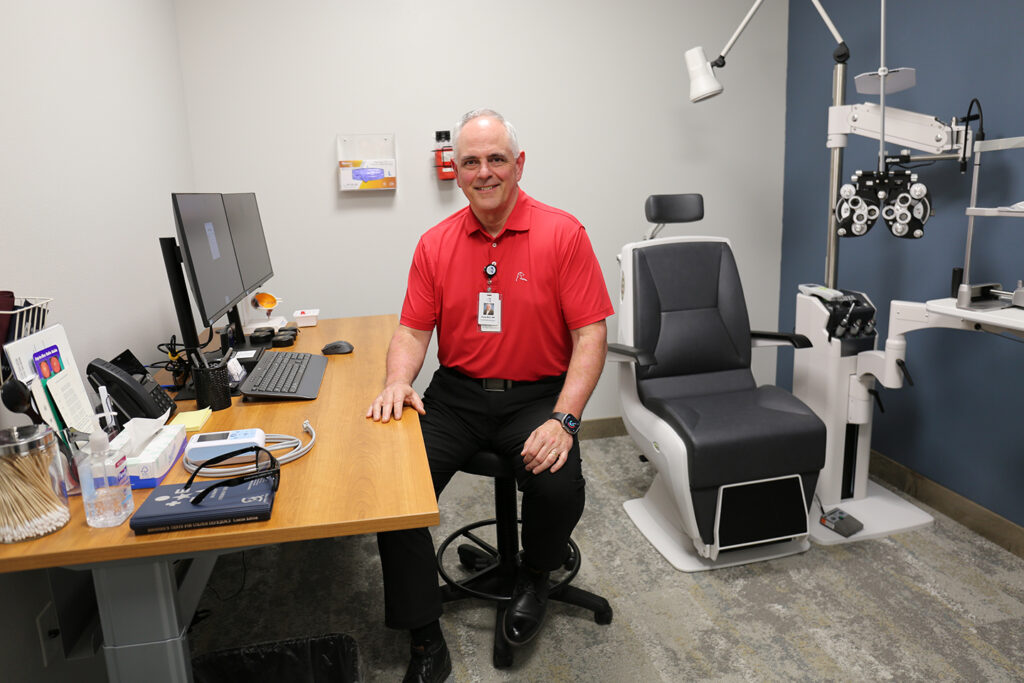
Meet Douglas Bull, MD
The cornerstone of ophthalmology at Reedsburg Area Medical Center is Dr. Douglas S. Bull, MD. With over 30 years of experience, Dr. Bull delivers expert, compassionate eye care to area residents of Reedsburg and other local communities. He is highly trained in diagnosing and treating a full range of eye conditions—from routine exams and glaucoma management to advanced procedures like laser retina surgery and cataract removal. With his deep expertise and commitment to patient well-being, you can trust your vision is in skilled hands.
Schedule Your Macular Degeneration Evaluation Today
Don’t wait until your eyes change. Make sure to protect your sight by booking an eye checkup now to assess the health of the back of the eye. Call 608-768-3900 to schedule a macular degeneration checkup with Dr. Bull at Reedsburg Area Medical Center.